
CIAM for SaaS
From federation to self-service: cidaas offers European Customer & Identity Access Management for scalable B2B SaaS platforms with high security and integration requirements.
SaaS provider, who trust cidaas

Stefan Denninger
Customer Experience Lead, ACP Group AG
Identity & Access Management for Software-as-a-Service
Customer Identity and Access Management is one of the most significant challenges, Software-as-a-Service (SaaS) providers are facing. How do SaaS providers create value for their customers today?
Traditional systems are often insufficient for SaaS
Single Sign-On alone is no longer enough for SaaS providers today. Your B2B customers expect secure self-service options, delegation, federation with existing corporate identities, and flexible role and organizational models.
In addition, SaaS platforms must support multi-tenancy, scalable user management, and deep integrations with existing business processes.
cidaas, as Europe’s leading provider of Cloud Identity & Access Management, helps modern SaaS providers meet these requirements efficiently and in compliance with the GDPR using a scalable CIAM platform.
Federation and Identity Linking
Through federation, companies can seamlessly integrate partners, suppliers, and external organizations into their digital infrastructure. This is done using their partners’ existing corporate identities, without the need to manage additional user accounts or passwords. The result is a secure and convenient login experience that extends beyond corporate boundaries, while authentication and access control are managed centrally.
Through Identity Linking, cidaas links a user’s various identities from different organizations or systems into a single, centralized digital profile – for example, following a migration or an M&A transaction. This provides companies with a unified view of partner and B2B identities, reduces administrative overhead, and lays the foundation for flexible, scalable, and secure collaboration – as well as access management – scenarios.
Why SaaS providers should choose cidaas
SaaS & the free trial period
Free trial periods and long-term introductory offers have long been a proven strategy for Software-as-a-Service providers to attract customers and convince them of the value of their service.
This builds trust with potential customers, gives them the opportunity to test or experience the offering for themselves, and is an effective way to generate leads. Users who have registered for the trial period can now be tracked and engaged in a structured manner.
The foundation for all of this is a modern Customer Identity & Access Management (CIAM), which not only provides user management—including the ability to invite teammates to a test account—but also creates the foundation, through Consent Management , for capturing user consent and planning further marketing initiatives.
B2B Group Management for SaaS solutions
Single sign-on is important for the individual user’s experience, but the ability for SaaS companies to manage their own users is just as important.
This brings the topic of Delegated User Administration or Group Managementinto focus. Companies want to quickly and easily add new employees to the SaaS account or independently remove them when an employee leaves.
cidaas´ intuitive group management is the perfect solution for this and complements features such as passwordless authentication, Single Sign-On, and multi-factor authentication a spart of the CIAM platform.
Single Sign-On through integration with the customer’s IdP
Bring-your-own-Identity is not just a buzzword; in the B2B sector, it is often already standard practice and a key requirement in the Software-as-a-Service (SaaS) space.
Companies that use Enterprise Identity & Access Management (EIAM) to manage their own employees and their access permissions to a wide variety of applications and services also require SaaS providers to allow them to integrate their own EIAM as an Identity Provider (IdP).
This allows the company to enable single sign-on even for Software-as-a-Service (SaaS) applications and to centrally manage its employees’ access permissions. The integration of IdPs is becoming increasingly important, particularly when combined with comprehensive group management for SaaS providers.
Payments and subscriptions linked to identity management
With the cidaas Payment & Subscription Feature , SaaS providers can easily integrate payment and subscription management services with their customer identity & access management, thereby creating a unified identity across all channels – and a comprehensive view of their customers.
The integration works well with permissions management and cross-selling and up-selling opportunities can be easily presented.
Self-service, registration & account management
SaaS platforms require flexible registration and self-service processes that combine security with user-friendliness. cidaas supports the following:
- Self-Service registration
- passwort reset and account recovery
- User account management
- Profile management
- Consent management
- Federated identities
- Identity verfication during registration via the ID validator
Flexible access management for enhanced security
SaaS applications require more than static role models. With Policy-based Authorization, companies can dynamically control access based on context, user role, devices, or security policies.
RBAC and Policy-based Access Control form the foundation for flexible and scalable authorization in SaaS platforms. This enables security requirements to be consistently enforced across applications and user accounts.
Benefits at a glance
- Focus on user-friendly management of digital identities in all forms
- A unique, secure user experience with modern two-factor authentication
- GDPR-compliant, customizable consent management
- Flexible, password-free login and registration processes for SaaS applications, web services, and digital platforms
- Centralized management of customer identities
- Risk reduction and improved safety
- Federation and Identity Linking
- Standard-based, no vendor lock-in
- Identity verification using the ID validator
- Identity orchestration powered by cnips
Multi-tenant CIAM for SaaS – scalable as needed
SaaS platforms require scalable identity solutions that securely separate different customers, user groups, and organizational structures. cidaas enables multi-tenant customer identity management with:
Central user management
Flexible roles and permissions
Delegated administration
Tenant isolation
Separated rights and access control
Scalable authentication across multiple client areas

Recommended by analysts
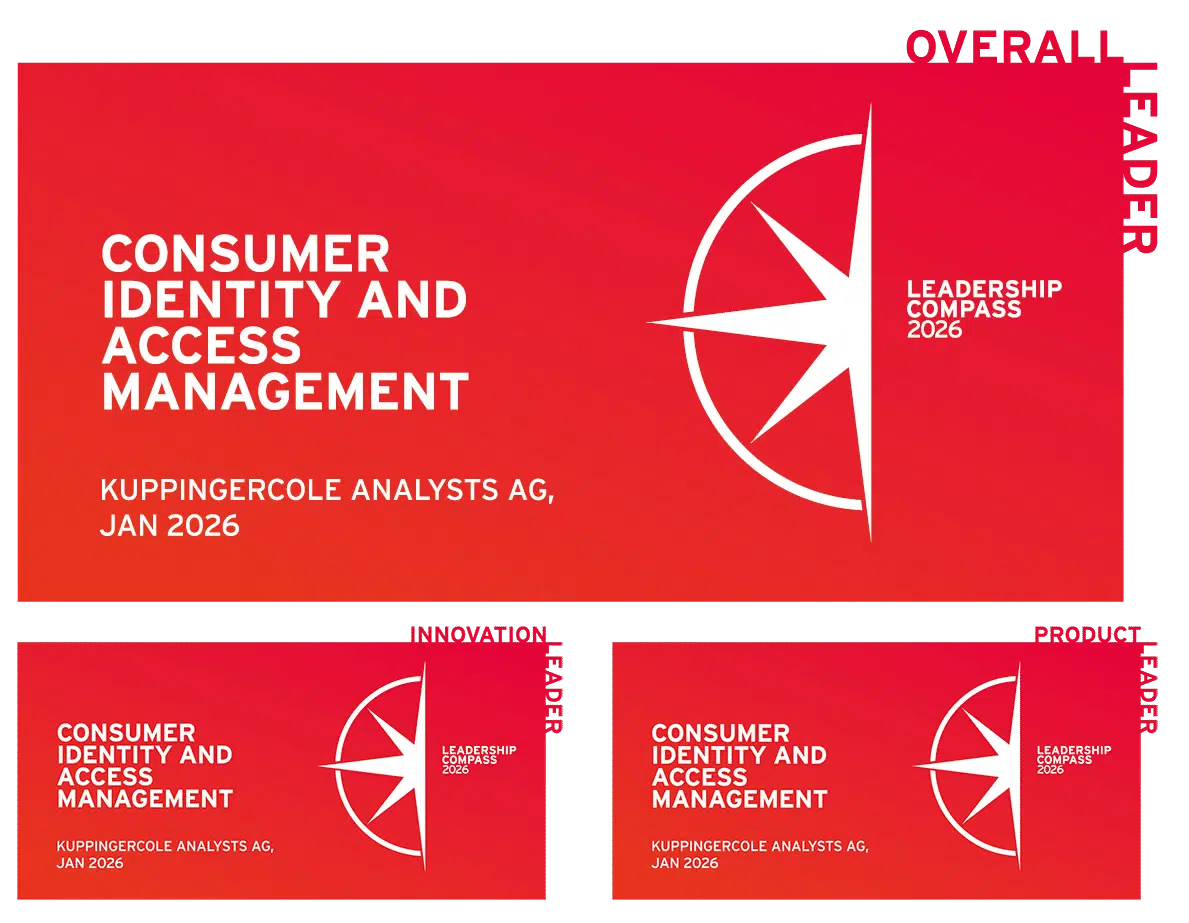
cidaas is the Overall, Product and Innovation Leader in the latest LeadershipCompass CIAM 2026 by KuppingerCole.
More info about CIAM for SaaS

ACP Group AG relies on cidaas for secure and efficient identity management
Learn how ACP Group AG uses cidaas to efficiently implement modern authentication, security, and user management.
Read ACP´s Win Note
Proactive Identity Security: cidaas integrates omniac to detect data leaks
Discover how cidaas strengthens proactive security measures and reliably protects sensitive identity data.
Read News
CIAM and customer experience are becoming key drivers of enthusiasm for SaaS providers
How modern CIAM enhances the user experience and fosters long-term customer loyalty.
Weiterlesen
SaaS Success Factors: CIAM with Group Management & Integration of Identity Providers
Discover strategies for scalable user management and secure digital identities.
WeiterlesenOpen standards for SaaS architectures
cidaas supports open standards and APIs for seamless integration into existing software, cloud, and developer ecosystems.
Why is cidaas, as a specialized CIAM provider, a better choice than a hyperscaler?

You should definitely go with professionals – a company that specializes in this. Microsoft or AWS are fine, but they don’t focus on this area – and that’s the big difference. Here, you have a company and a team that do exactly that, it’s their main job.
Stefan Denninger
Customer Experience Lead, ACP Group AG
Make your SaaS digitally sovereign
Digital sovereignty is increasingly becoming a competitive advantage for SaaS providers. In particular, data protection, control over data location, and regulatory requirements such as the GDPR now play a significant role in the selection of modern CIAM platforms.
With cidaas, companies are committed to European digital sovereignty. Thanks to exclusive hosting in Europe, customer data, identities, and login processes remain entirely under their own control.

 AuthZEN
 OAuth
OAuth
 EU Only
 OIDC
OIDC
Turn your SaaS identities into a competitive advantage
Optimize registration, login, access, and security with a scalable CIAM solution from Europe.
FAQs: CIAM for SaaS
With API-first architecture, SDKs, identity orchestration via cnips, and preconfigured authentication and registration processes, organizations can efficiently implement and scale modern CIAM capabilities such as Single Sign-On, passwordless authentication, access control, and user management—without complex legacy architectures or significant integration efforts.